How Did Stanley Cup Go Viral? The Creator-First Strategy African Brands Can Copy
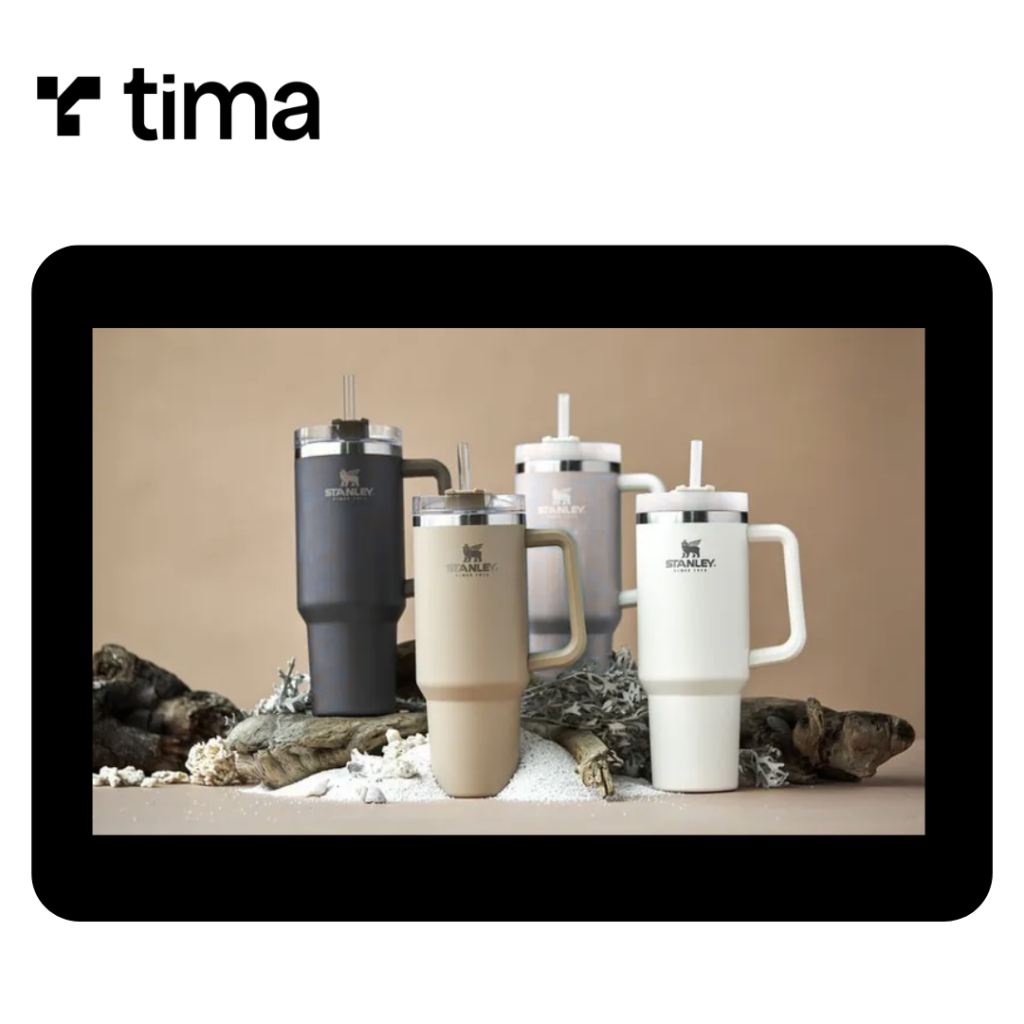
In 2019, Stanley had been making thermoses for over a century. Annual revenue sat at $74 million, and the brand was firmly invisible to anyone who did not work in construction or spend weekends fishing. The Quencher tumbler, launched in 2016, had flopped and been quietly discontinued. Stanley was, by every reasonable measure, a finished brand waiting to be archived.
By 2023, it was a $750 million business.
No new technology. No category change. No celebrity buy-in at the start. This was a deliberate decision to let the right creators carry the product to the right people before a single paid media dollar was spent.
That is the Stanley playbook. And it is more relevant to African brand marketing than most marketers on the continent have stopped to notice.
How Did Stanley Quencher Go From Discontinued to $750 Million in Four Years?
The story starts not with a brand decision, but with a commerce blog.
The Buy Guide was run by three women in Utah who reviewed products for their audience of everyday shoppers. In 2019, they became fans of the Stanley Quencher and brought it to the brand’s attention. Their argument was simple: Stanley was marketing to the wrong people. Outdoor workers and hikers were not going to take the tumbler viral. Women who cared about wellness, hydration, and aesthetics would.
Stanley was about to discontinue the Quencher. Instead, the brand partnered with The Buy Guide and relaunched it in June 2020 in pastel colours. It sold out within three weeks.
That was the moment. Not a campaign, not a media buy. A seeding decision and a community that was already primed to care.
When Terence Reilly, who had previously turned Crocs from an industry joke into a cultural status symbol, became Stanley’s president in 2020, he accelerated what The Buy Guide had started. He formalised the affiliate programme, launched limited-edition colour drops to sustain collector behaviour, and expanded creator partnerships into new communities.
By 2022, the Quencher had crossed $402 million in revenue. By 2023, the brand topped $750 million. The hashtag #StanleyTumbler crossed 300 million views on TikTok. A video of a woman’s Stanley surviving a car fire, ice still frozen inside, reached 96 million views. Reilly’s public response, which included promising to replace both the cup and the car, became its own viral moment.
The product had not changed. The community around it had.

What Was the Real Strategy Behind Stanley’s Creator-First Approach?
Most marketing retrospectives on Stanley focus on TikTok and call it social media success. That analysis misses the more important point.
Stanley did not launch a TikTok strategy. It seeded a community strategy, and TikTok was where that community happened to live.
The Buy Guide partnership was not an influencer campaign in the traditional sense. It was a distribution decision. Stanley essentially handed product and margin to a niche audience that already trusted The Buy Guide’s recommendations, and let that trust transfer to the brand. The creators did not receive a brief telling them what to say. They already had opinions about the product and an audience that would listen.
This is the distinction that matters for African marketers. The brands that have struggled to replicate viral success in their markets have often built campaigns that look like creator marketing: influencer contracts, posting schedules, caption guides. But the mechanism that made Stanley work was not content production. It was trust transfer, from an existing community to a brand, through a creator who was already embedded in that community.
Three things defined the approach:
Seed before scale. The Buy Guide was not a large media property. It was a niche blog with a loyal, specific audience. Stanley did not look for reach first. It looked for the right community first, then let reach follow.
Build collector behaviour. Limited-edition colour drops turned a water bottle into a rotating product line. Every new drop gave the community something to talk about, share, and hunt for. The scarcity was designed. The conversation was organic.
Reward creator loyalty before introducing celebrity deals. Stanley’s first celebrity partnership, with country singer Lainey Wilson, did not come until July 2023, three years into the brand’s viral run. By then, the community was already strong enough that the celebrity added fuel rather than built the fire.
Why Does the Stanley Strategy Work and What Does It Have to Do With Africa?
The Stanley playbook works because it is built on a marketing principle that predates social media: people trust people more than they trust brands.
In Africa, this principle is not a trend. It is the dominant condition of consumer behaviour.
61% of Nigerian social media users trust influencer recommendations over traditional advertising. In Kenya, consumers spend more time on social media per week than anywhere else in the world: 27 hours and 16 minutes on average, against a global average of 14 hours and 4 minutes. Across South Africa and Ghana, trust in creator content over branded content is consistently documented in consumer research.
The conditions that made Stanley’s creator-first approach effective in North America are structurally present across African markets. What is missing, in most brand campaigns on the continent, is the sequencing that Stanley got right.
African brands typically run creator campaigns in the wrong order. They define a message, hire influencers to distribute it, and then measure reach. Stanley’s approach was the reverse: find the community that already wants what you have, put the product in their hands, and build the campaign architecture after you understand what they respond to.

Which African Brands Have Already Used Creator-First Marketing to Build Cultural Moments?
The Stanley blueprint has African precedents. They are worth naming because they prove the model travels.
YouTube’s pan-African #MadeForYouAfrica campaign ran creator content across Nigeria, South Africa, and Kenya with culturally localised assets in Hausa, Yoruba, Pidgin, isiZulu, Afrikaans, and Swahili. Phase one alone produced over 3,000 short-form creator videos and generated 85 million views. Brand recall rose 9.6% in Nigeria and 6.5% in South Africa. It did not start with a media buy. It started with creators making content in their own language about their own culture.
In Nigeria’s fintech category, OPay’s rapid user acquisition was driven significantly by peer recommendation and creator-led word of mouth. The product seeded into urban communities, and referral behaviour took it from there. The underlying logic is the same as Stanley’s: trust transfer through community, not brand broadcast.
TIMA’s campaign for ByteDance LetsChat in Nigeria deployed a network of lifestyle, comedy, and beauty creators across Instagram and TikTok to drive app downloads. The campaign generated 44 million impressions from a combined creator following of 25.7 million, a 5.5x earned media multiplier on a $30,000 spend. The cost per install came in at $0.0007. The brand did not go viral in the Stanley sense, but the mechanism was identical: seed the right communities with trusted voices before scaling.
For Travelbeta, four consecutive years of influencer campaigns built around Big Brother Naija, DStv, and YouTube generated 40 million viewers across Africa and 2.7 billion media impressions. The brand did not just win awareness. It became part of how young Africans imagine travel. That is a cultural moment.
How Can African Brands Apply the Creator-First Strategy in Their Next Campaign?
The gap between Stanley’s playbook and most African brand campaigns is not budget. It is sequencing and community thinking. Here is how to close that gap:
Find your Buy Guide before you run your campaign. Before briefing an influencer, identify the niche community that already cares about what your product does. In Nigeria, that might be a WhatsApp group of personal finance obsessives. In Kenya, it might be a fitness creator with 18,000 followers and a deeply engaged comment section. In Ghana or South Africa, it might be a fashion micro-community on TikTok. The size of the audience matters less than the specificity of their trust.
Seed the product, not the message. Give creators the product and let them respond to it honestly before you define campaign messaging. The messaging that converts is rarely the messaging brands write internally. It is the language the community already uses about the problem the product solves.
Build a collection mechanic. Stanley’s limited drops sustained conversation between campaigns. African brands can apply the same logic through limited-edition packaging, exclusive creator bundles, or seasonal launches tied to cultural events like AFCON, Detty December, or public holidays that carry emotional weight in specific markets.
Track earned media, not just paid reach. The metric that reveals whether a creator-first approach is working is earned media value: the organic content, shares, and conversations that happen outside your paid placements. A campaign generating a 5x or 6x earned media multiplier is showing that the community has adopted the product as their own. That is the signal Stanley saw with the Quencher.
Delay the celebrity deal. Terence Reilly waited three years before bringing a celebrity into the Stanley story. The community was already there. The celebrity amplified it. Most African campaigns try to use the celebrity to build the community and find that celebrity reach is wide but not deep. Celebrity deals work best as the third act, not the first.
What Is the Real Lesson From Stanley Cup for African Marketers?
Stanley’s rise from $74 million to $750 million in four years is often called a social media success story. It is more accurately a community strategy that social media made visible.
The brand did not find an audience. It found a community that already existed, put the right product in their hands, and trusted the community to do what communities do: talk, share, and recruit.
For African brands, the invitation in that story is not to replicate a viral tumbler moment. It is to ask a more fundamental question about how campaigns are being structured. Are you broadcasting a message to an audience, or are you building a community around a product?
The African creator economy is projected to grow from $3.08 billion today to $17.84 billion by 2030. The infrastructure for community-first marketing, from micro-influencer networks to UGC campaigns to affiliate creator programmes, is already here. The brands that will capture the most value from that growth are the ones who sequence their campaigns the way Stanley did: community first, message second, scale third.
That is the strategy. And it does not require a car fire video to work.
TIMA (The Influence Media Agency) is a full-service creator marketing agency operating across Africa and the Middle East. TIMA Connect, our AI-native campaign operating system, manages influencer, UGC, affiliate, performance, podcast, newsletter, and publication campaigns from a single platform. To start building a creator-first strategy for your brand, visit timaconnect.ai.